Chakra Healing Meditation: Balancing the Seven Energy Centers
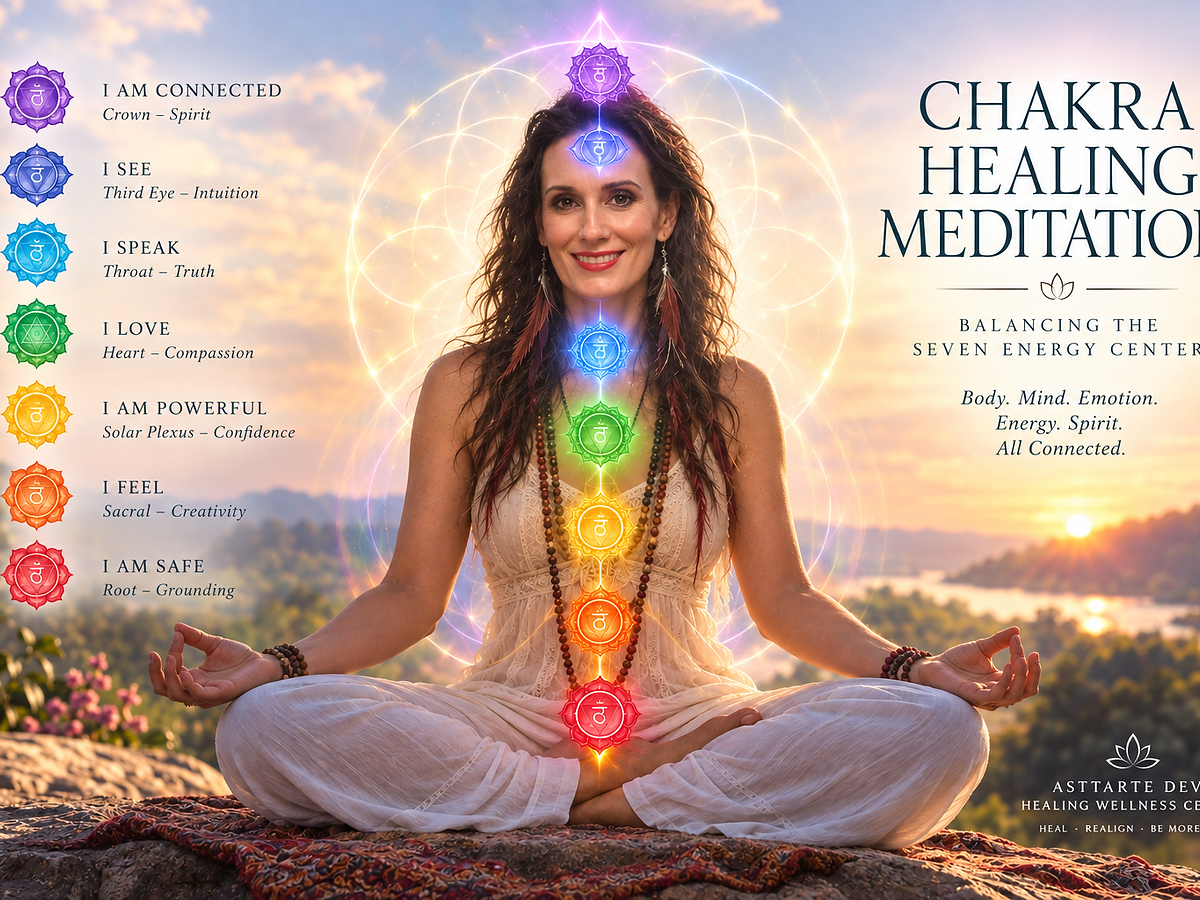
Chakra healing meditation offers a way to explore the relationship between your body, emotions, energy and spiritual awareness.
In yogic and energy-healing traditions, the chakras are understood as centers of subtle energy. Each chakra is associated symbolically with particular qualities, areas of life, colors and aspects of human experience.
Working with your chakras does not mean that you must always feel perfectly balanced. Instead, chakra meditation can become a practice of noticing: Where do you feel open? Where do you feel guarded, energized, depleted or in need of compassionate attention?
Chakra work can be explored through meditation, visualization, breathwork, sound, mantra, Reiki, movement and energy awareness. These practices can be experienced independently or incorporated into a private energy-healing session.
The Root Chakra is located symbolically at the base of the spine and is associated with grounding, stability, safety, belonging and our basic relationship with the physical world.
When meditating on the Root Chakra, you might bring awareness to your feet, legs and connection with the earth. You can reflect on what helps you feel secure, supported and present.
The Sacral Chakra is associated with emotion, creativity, pleasure, movement and our capacity to experience life fully.
Sacral Chakra meditation may invite you to notice your emotional flow, creative expression and relationship with your body. This chakra is not exclusively about sexuality; it can also represent vitality, feeling and the ability to move with change.
The Solar Plexus Chakra is associated with personal power, confidence, motivation, boundaries and the ability to take meaningful action.
Meditating on this center may invite you to reflect upon where you feel empowered, where you doubt yourself and how you can act from self-respect rather than fear or the need for approval.
The Heart Chakra is associated with love, compassion, grief, forgiveness, connection and the balance between giving and receiving.
Its traditional color is green, although pink is also used in some contemporary practices.
Heart-centered meditation can create space to acknowledge both love and loss without forcing the heart to open before it feels ready. Healthy heart-centered practice can include compassion for others while also honoring boundaries, self-respect and love for yourself.
The Throat Chakra is associated with communication, listening, truth and authentic self-expression.
Meditating on this chakra may help you notice what you need to say, where you silence yourself and how you can communicate with greater honesty and care.
The Third Eye Chakra is associated with intuition, insight, imagination and inner vision.
Third Eye meditation can support reflection and intuitive discernment. Intuition does not always need to be dramatic or psychic. Sometimes it appears as a quiet recognition, a repeated insight or a grounded sense that something is—or is not—aligned for you.
The Crown Chakra is associated with spiritual awareness, consciousness and connection with the sacred or something greater than the individual self.